 OctSum
Lecture Summarizer: Turn Course Videos into Study Notes
Revision is not always about watching the whole lesson again. Identify what you have not understood, then return to that explanation with a clear purpose.
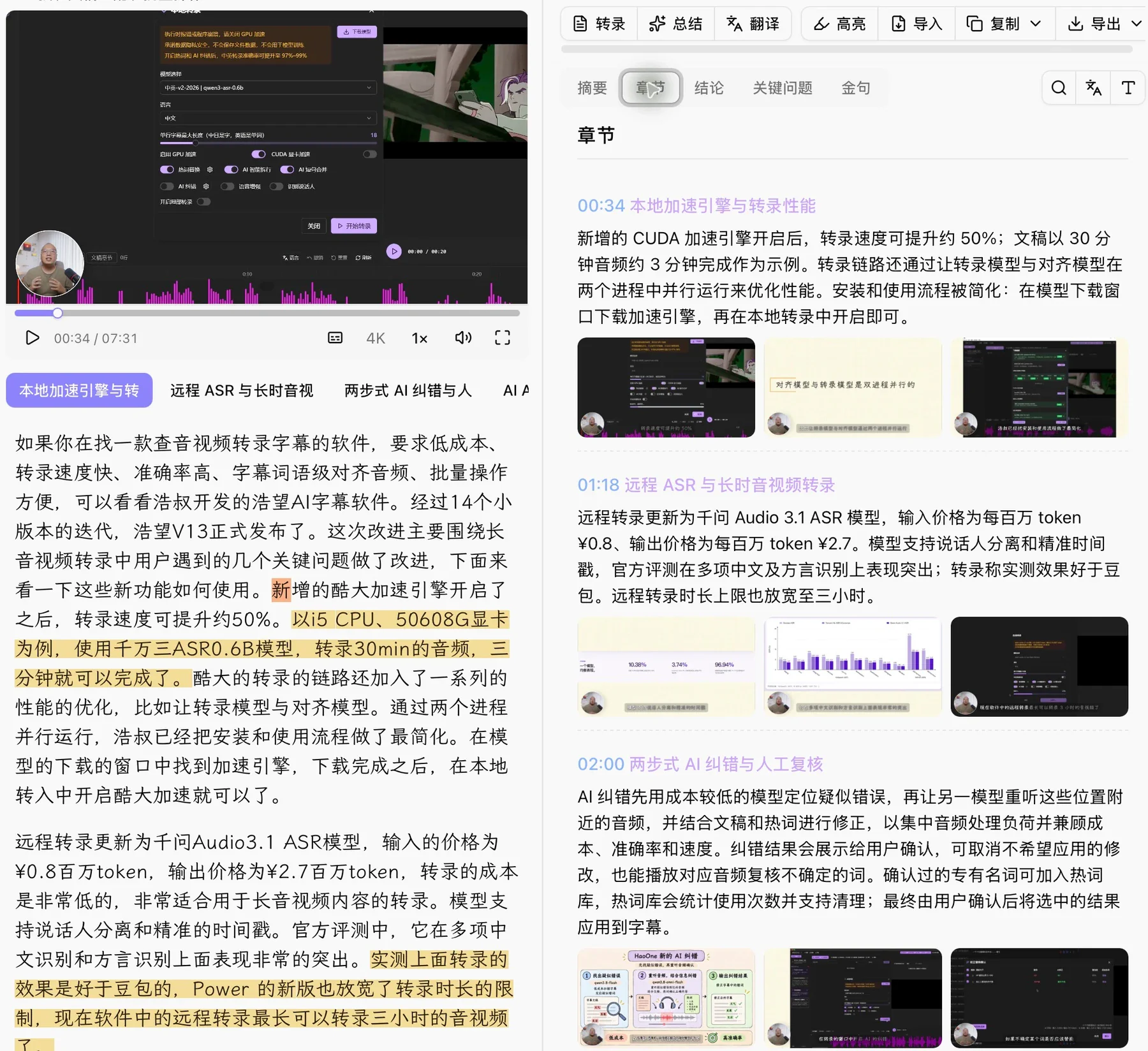
Chapters and keyframes. Features described inside the example source belong to that source product.
Preserve learning order
Course notes should retain definitions, principles, examples and common mistakes in a usable sequence. Later material may depend on earlier concepts.
Keep lesson numbers and coherent folders when organizing a course, so prerequisites remain traceable.
The desktop workflow
- Import a course you are allowed to use: Add a supported video link or local lecture recording in the app. Transcribe it and check the specialist terminology.
- Organize the ideas by chapter: Read the summary and distinguish definitions, examples and conclusions. Return to the video for diagrams and derivations.
- Prepare your revision notes: Export Markdown and add questions you still need to answer. During revision, try answering them before replaying the relevant section.
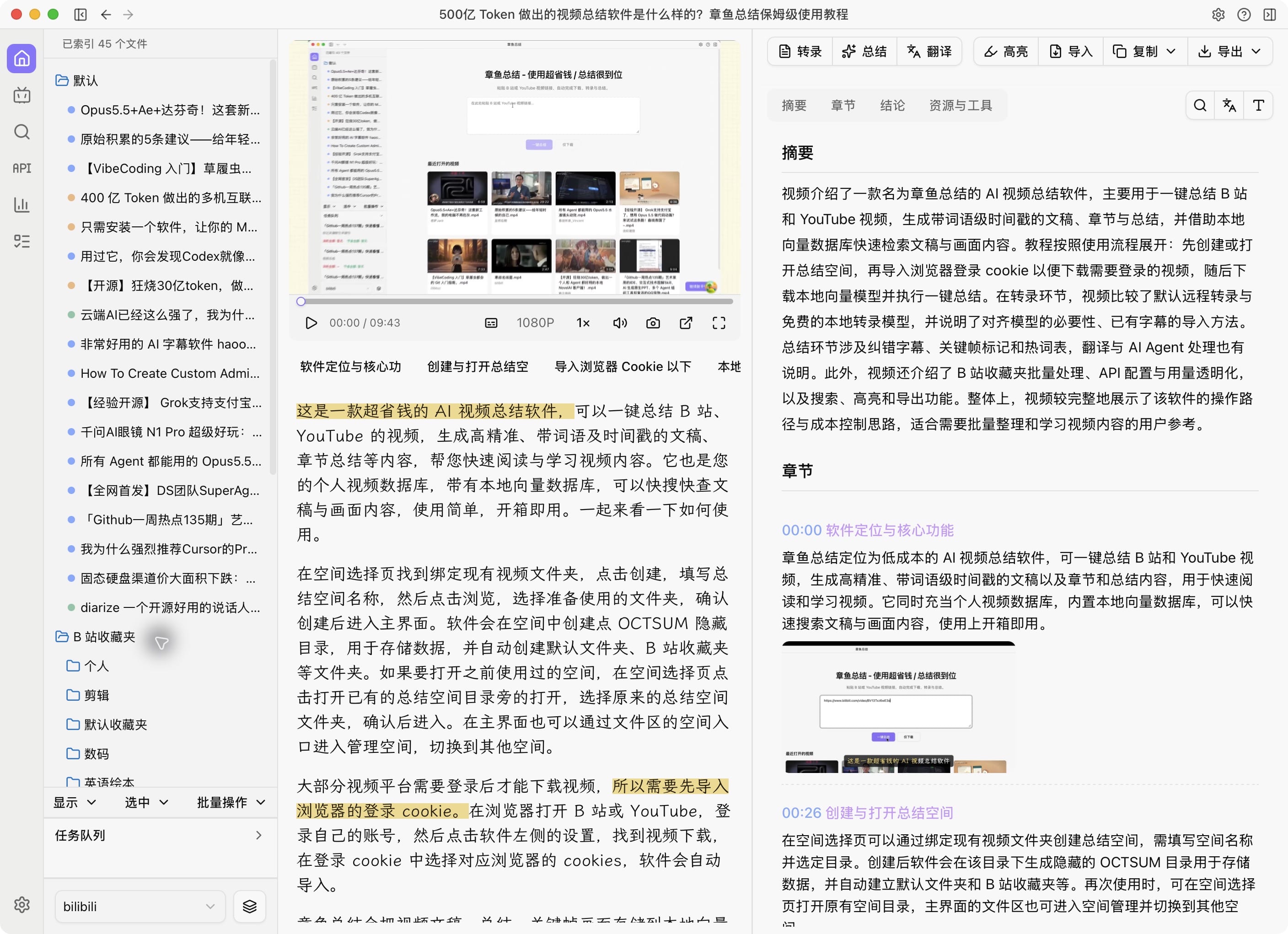
Real app view: reading the official OctSum tutorial with its transcript and summary.
Separate explanation from practice
A summary helps recall what was taught; understanding still requires explanation or practice. Restate a concept yourself and check missing conditions.
Inspect formulas, diagrams and notation in the source frames. Do not fill an unclear symbol with a confident guess.
Plan the next review
Record weak topics, source chapters and practice needs. Start the next review there instead of replaying everything.
The workflow supplies transcripts, summaries and source navigation. It does not promise a complete question bank or automatic grading.
Example note structure
This original example illustrates a possible structure; it is not the actual result shown in the screenshots.
Two variables changing together does not show that one causes the other. When ice cream sales and swimming both increase, temperature may be influencing both.
Concept: Correlation describes shared variation; it does not establish causation on its own.
Lecture example: Temperature could influence both ice cream sales and swimming activity.
Revision question: When two measures rise together, which shared influences should you investigate?
Frequently asked questions
Can a summary replace watching the lecture?
No. Use summaries to find structure and review priorities. Derivations, experiments and practical steps still need the original, and exercises help check your understanding.
Can I process a paid course?
Use content you have permission to access and process. The app does not promise to bypass course access controls, paywalls or content protection.
Will every formula in a slide be retained?
A speech transcript may not include all visible formulas. Check diagrams, board work and derivations against the video, then supplement your exported notes.
Start with one familiar source
Validate the workflow with a short recording before moving to longer material or a batch. Processing takes place in the Windows or macOS app; the website provides information and downloads. Software licensing is separate from AI usage. Local ASR does not consume official credits; online services, personal APIs and external agents may charge separately.
Start with one video
Create an account, download OctSum, then import, transcribe and summarize on your computer. AI service availability and costs depend on your chosen model and configuration.